Friday, September 08, 2006

Key Values for Corporate Worship at WBC

This week's "...Sunday's Coming" is an article I wrote for my church's monthly/semi-monthly newlestter. It's also a condensed version of a larger handout I handed out this summer during a sermon explaining our key convictions and values of corporate worship. Would love your feedback.

“Why We Do What We Do on Sunday Mornings”

We human beings are very skilled at not truly understanding why we do certain things. I remember hearing a story about a newlywed preparing her first Thanksgiving Dinner for her husband. Before putting the ham in the oven, she cut off the end of the ham and threw it out. He wondered why. “Well, that’s the way my mother always did it. It’s a family tradition,” she said. Later on, she asked her mother why she always cut the end of the ham off and her mother simply replied, “Well, Grandma always did it that way.” So mother and daughter continued their quest for the meaning behind this secret recipe and asked grandmother why she always cut off the end of the ham. “Simple,” she said. “That’s the only way I could get it to fit in the pan!”

Sometimes, we ourselves cannot explain our own family traditions, and we find out why we do what we do is just plain silly! But what about our “worship traditions”? Is it possible for us to do things in corporate worship just because “that’s the way we’ve always done it”? You bet it is! Be encouraged! The problem is not tradition, but traditionalism. Here’s the difference: “Tradition is the living faith of those now dead. Traditionalism is the dead faith of those still living" (Jaroslav Pelikan, The Vindication of Tradition, p. 65, emphasis added). We must constantly affirm and rediscover those traditions that are both biblically-grounded and Spiritually-transforming, while at the same time constantly guard against traditionalism that is both self-centered and spiritually-deadening.

During a sermon this past July, I laid out eight key terms that will help our church family understand why we do what we do on Sunday mornings. Over the months ahead, I will highlight one term, what it means, and how it could help us treasure Jesus Christ during our times of gathered worship. Because what we do here on Sundays is so vital for maintaining our lives-of-worship the rest of the week, I want to re-share with you what shapes our corporate worship.

  • God-Centered: The entire service should direct our attention and affections to God, not self.

    Psalm 148:13; Isaiah 42:8; 45:23; John 17:24; Romans 11:33-36; Revelation 21:23.

  • Christ-Exalting: Our duty is the delight of reminding each other of the gospel: that we are sinners saved by the life, death, and resurrection of Jesus Christ.

    John 1:14; Philippians 2:9-11; Colossians 1:15-20; 1 Timothy 1:15; Hebrews 1:3; 10:19-22; 1 Peter 2:5; Revelation 5:9-12.

  • Bible-Saturated: The content of every part of our worship service must be Word-centered from beginning to end.

    Psalm 19:7-11; 138:2; Jeremiah 15:16; Isaiah 66:2; Matthew 4:4; 1 Timothy 4:13; 2 Timothy 3:16-17; Hebrews 4:12; 1 Peter 1:19-21; Revelation 1:3.

  • Whole-Hearted: We must strive for a growing, supreme love for God, not just a feeling that says “worship was good today.”

    Deuteronomy 6:4; Psalm 34:8; 51:12; 90:14; Matthew 15:8-9; Ephesians 1:18; Hebrews 11:6; 1 Peter 1:8.

  • Always-reforming (particularly with music): We will sing a mingling of the God-centered, gospel-focused, and theologically-rich songs of the past and present, allowing for modern expressions of ancient truths.

    Psalm 40:3; 96:1; 149:1; Isaiah 42:10; Ephesians 5:19-20; Colossians 3:16; Revelation 5:9.

  • Mutually-Encouraging: It is the responsibility of every believer to encourage one another, especially in corporate worship.

    1 Corinthians 12:4-7; 14:26; Ephesians 2:22; 5:19; Hebrews 10:24-25; 1Peter 2:9.

  • Undistracting Excellence: Over-the-top excellence or shoddy mediocrity must never draw our attention away from God’s glory and our responsibility to one another.

    1 Chronicles 15:22; 1 Corinthians 10:31; 14:40.

  • Kingdom-Oriented: When we worship God together, we join into the worship of the church around the world, who also proclaims Jesus as Lord.

    1 Corinthians 11:23-26; Philippians 3:20; Hebrews 12:20-24; Revelation 7:9-10.


UPDATE!!!!!
Two important ministries hugely affected my ideas and phraseology. So I'm big-time in debt to both Bethlehem Baptist Church and Grace for Missouri. Check 'em out!

Saturday, September 02, 2006

It's Friday...but Sunday's Coming!

How many times do we come to the Word of God and it seems like it goes in one ear and out the other. Without the illuminating work of the Holy Spirit, preaching can become just a transfer of information. This week, let us together plead with God to plant his word deep into our hearts and minds, into our very soul, so that we may bear the fruit of faithful, obedient lives.


A PRAYER OF ILLUMINATION
Living God,
help us to hear your Holy Word with open hearts
so that we may truly understand;
and, understanding,
that we may believe;
and, believing,
that we may follow in all faithfulness and obedience,
seeking your honor and glory in all that we do.
Through Christ, our Lord. Amen.


—Huldrych Zwingli (1484-1531) altered, as collected in The Worship Sourcebook, 3.1.15

Thursday, August 31, 2006

FreeDerekWebb.com....Sept. 1

To further confirm my opinion that Derek Webb is an Indie Folk version of Keith Green, he is offering his entire cd project Mockingbird for free download as of Sept 1. Why's he doing this? In Webb's own words:

as an artist (and often an agitator), this is something i am keenly aware of. my most recent record 'mockingbird' deals with many sensitive issues including poverty, war, and the basic ethics by which we live and deal with others. but i found that music has been an exceptional means by which to get this potentially difficult conversation going. and this is certainly an important moment for dialogue amongst people who disagree about how to best love and take care of people, to get into the nuances of the issues.

one of the things that excites me most about the future of our business is how easy it is becoming to deliver music to people who want to hear it. i heard a story once about keith green caring so much that people were able to hear and engage with his music that he gave it away for free, which was a very difficult and expensive thing to do at that time. it's actually never been as simple as it is today to connect music with music fans. and i want people to have a chance to listen to mockingbird and engage in the conversation.


So check it out FreeDerekWebb.com. If you're new to his music WARNING he'll probably offend you at some point. But cheer up! You probably needed to be offended. He's honest, biblical, creative, obviously generous, and God-centered.

Link:
FreeDerekWebb.com.

Monday, August 28, 2006

It's a......BOY!!!!


Back by popular demand, here's the next installment of "Otte Family Update"! Despite the fact that most of our friends had us convinced that we were going to have a girl, we are proud to announce that Heidi is carrying a healthy baby boy! The hour plus ultrasound showed that by all appearances, baby boy Otte is doing very well as is his mother. The entire ultrasound was videotaped and (even after the 10th viewing) should prove much more impressive than the rest of the Red Sox season.

Friday, August 25, 2006

It's Friday...but Sunday's Coming!

Have you considered how praying for both those who lead and those who participate in gathered worship is another powerful way of preparing your own heart and mind to encounter the risen Christ, feast on his word, and fellowship with the redeemed? Here are a few prepared prayers that might stoke some white-hot worship in your own life as you get ready for Sunday.

Almighty God, we pray for your blessing
on the church in this place.
Here may the faithful find salvation,
and the careless be awakened.
Here may the doubting find faith,
and the anxious be encouraged.
Here may the tempted find help,
and the sorrowful find comfort.
Here may the weary find rest,
and the strong be renewed.
Here may the aged find consolation
and the young be inspired;
through Jesus Christ, our Lord. Amen.

The Worship Source Book, 1.1.3

O God,
we joyously come together to worship,
realizing we need not summon you into our midst,
for you are here.
We need not call you into the secret places of our hearts,
for you are there.
We need our eyes of faith to be opened,
that we may see you;
our ears to be unstopped,
that we may hear you;
our minds to be sensitive,
that we may know you;
our hearts to be tender,
that we may receive you.
Grant each one a blessing, O Lord,
as each has need,
in the name of Jesus Christ, our Lord. Amen.

The Worship Sourcebook, 1.1.6

Holy God, we pray your blessing
on those who lead us in worship this day,
those who speak and sing and move among us,
those who direct others in singing and playing,
those who have prepared this space with beauty.
We ask that each of them may lead
with a sense of peace and confidence that comes from your Spirit,
so that your truth may be proclaimed faithfully
and we may live up to our calling as the body of Christ.
Through Jesus Christ, our Lord. Amen.

The Worship Sourcebook, 1.1.10

Thursday, August 24, 2006

Web Resources on Calvinism/Doctrines of Grace/TULIP

Monergism: Calvinism. This is THE PLACE to go. Tons and tons of articles from a huge array of theologians and pastors. Articles, sermons (audio and print), book reviews neatly arranged by author and/topic. Piper and Azurdia’s sermon series are stellar!

Monergism: Doctrines of Grace. This part of Monergism's site also has a bunch of goodies.

Desiring God: The Doctrines of Grace (Calvinism & TULIP Theology). Articles, sermons, and products.

Desiring God:What We Believe About the Five Points of Calvinism."Most recommended for a comprehensive explanation of the doctrines of grace. About 25 pages.

The Calvinist Corner. Not really sure about this one, but what I’ve seen I like. Like anyone who goes by the title “Calvinist”, you or I may not agree on every detail or argument. One example: I still don’t find his argument on infant baptism convincing. What can I say, I’m a good Baptist! In short, I believe the covenant oath sign of the New Covenant is the circumcised heart by the Spirit, not baptism. Nevertheless, this guy is very helpful.

Tim Challies: What It Means to be Reformed. He says quite a bit more but here’s his conclusion: “So what does this all mean? To be Reformed is to adhere to the purist teachings of the Bible - to affirm the doctrine taught by Jesus, Paul and the apostles.”

Spurgeon.org: A Letter from George Whitefield to the Rev. Mr. John Wesley.A blast from the past. Here is a great dialogue between two brothers in Christ who did not agree. Whitefield is an excellent example of how silly it to "logically deduce" that the doctrines of grace squelches evangelism and deadens urgency.

Friday, August 18, 2006

It's Friday (again)...but Sunday's Coming!

How do you sing in (better said: "with")the church? I'm not asking whether you sing on pitch or not, or even if your voice sounds good. Some of us can only make "a joyful noise". Don't be ashamed, you've got a verse for that (Psalm 100:1)! Rather, who's the audience you're singing to: the people beside you or God? Who's leading you in song: the music leader or the Spirit of God? When do you sing with the most gusto: only songs that you like?

Sometime last year I came across these words from John Wesley that he wrote as a preface to a 1761 hymnal. In case you've forgotten, his brother, Charles, wrote about 6,500 hymns! Consider what he has to say. And may your voice be an instrument of praise as you worship God together with the redeemed this week.

- Sing all. See that you join with the congregation as frequently as you can. Let not a slight degree of weakness or weariness hinder you. If it is a cross to you, take it up, and you will find it a blessing.

- Sing lustily and with a good courage. Beware of singing as if you were half dead, or half asleep; but lift up your voice with strength. Be no more afraid of your voice now, nor more ashamed of its being heard, than when you sung the songs of Satan.

- Sing modestly. Do not bawl, so as to be heard above or distinct from the rest of the congregation, that you may not destroy the harmony; but strive to unite your voices together, so as to make one clear melodious sound.

- Sing in time. Whatever time is sung be sure to keep with it. Do not run before nor stay behind it; but attend close to the leading voices, and move therewith as exactly as you can; and take care not to sing too slow. This drawling way naturally steals on all who are lazy; and it is high time to drive it out from us, and sing all our tunes just as quick as we did at first. ...

- Above all sing spiritually. Have an eye to God in every word you sing. Aim at pleasing him more than yourself, or any other creature. In order to do this attend strictly to the sense of what you sing, and see that your heart is not carried away with the sound, but offered to God continually; so shall your singing be such as the Lord will approve here, and reward you when he cometh in the clouds of heaven.

—From John Wesley’s Select Hymns, 1761

Thursday, August 10, 2006

It's Friday...but Sunday's Coming!

PREPARING TO WORSHIP WITH THE CHURCH
Assuming that most of us still worship with fellow Jesus-followers on Sunday, what do you do to prepare for Sunday? Change your alarm clock from 6:30am to 9:50am so that you can be ready to slip into the service by 10:15am? Do you give any thought the night before as to what you might experience when you worship God with your local church?

In a recent sermon, I challenged my friends to think through how they could come ready to hear from God and ready to encourage one another. To help them, I gave everyone a copy of a something that Pastor John Piper prepared for his home church, Bethelhem Baptist Church. It's called Take Heed How You Hear. And even though it directly addresses the question "How can I prepare myself to hear the Word of God preached?" it can be applied to the larger question "How can I prepare myself for the whole experience of gathered worship?"

Here's an excerpt:
3.Purify your mind by turning away from worldly entertainment.
James 12:1, "Putting aside all filthiness and all that remains of wickedness, in humility receive the word implanted, which is able to save your souls." It astonishes me how many Christians watch the same banal, empty, silly, trivial, titillating, suggestive, immodest TV shows that most unbelievers watch. This makes us small and weak and worldly and inauthentic in worship. Instead, turn off the television on Saturday night and read something true and great and beautiful and pure and honorable and excellent and worthy of praise (Philippians 4:8). Your heart will unshrivel and be able to feel greatness again.

9. Think earnestly about what is sung and prayed and preached.
1 Corinthians 14:20, "Brethren, do not be children in your thinking; yet in evil be infants, but in your thinking be mature". So Paul says to Timothy, "Think over what I say, for the Lord will give you understanding in everything" (2 Timothy 2:7). Anything worth hearing is worth thinking about. If you would take heed how you hear, think about what you hear.


SO let's here it: what do you do to get ready for Sunday?

New Weekly Post

Starting this week, I'll be writing a special weekly post that'll have something to do with gathered worship called "It's Friday...but Sunday's Coming!" I hope that you'll find it very practical, whether you're a pastor, music leader, nursery worker, usher, CEO, tech-geek, body-builder, deer-tracker, burned-out-hypie-turned-Jesus-follower, or whatever. Let's be sure to hear from you, too. Let's hear your questions, frustrations, joys, and ideas. See you Friday!

Tuesday, August 08, 2006

My beautiful wife and child

Heidi is now almost half way there! She's so beautiful!!!!! Next week we get to find out whether our child is a boy or girl (if he or she is cooperative). It's fascinating to think that we'll be able to see all of the developing organs of our baby and see how it going in there. So much has gone through my mind and heart as I consider what it means to be a father. As much as I want to show and prove my love to my wife and child, I know that my love is not enough. I must point them both to Christ. They need my love, but they need His love even more still. I've been finding great comfort in these words from the prophet Isaiah:

Isaiah 49:15-16
"Can a woman forget her nursing child, that she should have no compassion on the son of her womb? Even these may forget, yet I will not forget you. Behold, I have engraved you on the palms of my hands; your walls are continually before me.

Tuesday, August 01, 2006

Destroy the Image

"What we've got to do in the music business is destroy the image that has got through... which has [given] God Almighty and Jesus Christ...an image of a weakling. A slightly effeminate image. A sort of Sunday image. A religious image. This is not the case....This is something we're trying in U2 to do something about."

Bono, in a recently released 1981 presentation to a weekend retreat for Christian musicians with fellow band members the Edge and Larry Mullen Jr.

As quoted in Christianity Today: Quotation Marks

Friday, July 21, 2006

Blogavacation: Montreal

Next week I am taking a blogavacation, serving alongside my buddy Dwight on the streets of Montreal, telling people about Jesus. I'm pumped about this!!! Knowing Dwight this past year and reading about all that God has done in and through this dude the past few months of his street ministry, I can't wait to be challenged, used, humbled, schooled. To be honest, I've always been leery of street evangelists, second-guessing their ministry because of the assumed lack of discipleship that goes on. But the ministry Dwight is connected with is deeply committed to the local church. Plus, I think my mentality is way too text-book. I long to know the urgency that drives the true evangelist. So pray for me and my friends from WBC. Pray for Dwight and his mentor Tony. Pray for Montreal.

By God's grace and for his glory!

Tuesday, July 18, 2006

"The separation of worship into preference groups is everyone's fault"

Carl Stam, over at SBTS, offers a weekly email ministry called Worship Quote of the Week. If you don't subscribe at least put this gem in your favorites cause his archives are chock full of great quotes from the giants of the faith, past and present. This week's quote on the foolishness of the "traditional vs. contemporary music" debate.


THE LIMELIGHT OF CHRISTIAN WORSHIP
Traditionalists have much to answer for in their reluctance to understand that tradition does not mean stasis but change. In their reaction against contemporary styles, they fail to understand that what they have gotten used to was once contemporary and often objectionable. Contemporists likewise fail to understand how blunted their tastes are when only "their music" seems to do the trick and when what they are doing has, ever so quickly, frozen itself into a tradition. So we end up with two kinds of shortsightedness, one supposedly old, the other supposedly new, and both wish fulfilling. The separation of worship into preference groups is everyone's fault, in that narrow musical satisfaction has turned out to be more important than style-proof outpouring. I encourage people of all practices to become intently and intensely curious about each other's ways.

The church desperately needs an artistic reformation that accomplishes two things at once: first, it takes music out of the limelight and puts Christ and his Word back into prominence; and second, it strives creatively for a synthesis of new, old and crosscultural styles. A deep understanding of the arts, coupled to the understanding that at best the music of corporate worship is simple, humble and variegated, would bring something about that would make all churches into worshiping and witnessing churches that happen to sing.

—Harold Best, UNCEASING WORSHIP: BIBLICAL PERSPECTIVES ON WORSHIP AND THE ARTS. Downers Grove: InterVarsity Press, 2003, p. 75. ISBN 0-8308-3229-7

Wednesday, July 12, 2006

The ESV "To Do" Bible

To all my friends who worked (or still work) at CBD. I'm sure this is gonna be a best seller!


From my friend, Marc at Purgatorio...

On the heels of its successful ESV Journaling Bible, Crossway has announced a Bible for those of us on the go, the ESV “To Do” Bible. Crossway representative Justin Taylor says “I know when I am reading my Bible, things I need to do pop in my head and because I am immersed in the study of God’s Word, I frequently forget them by the time I’m done. Now, thanks to the “To Do” Bible, I can just jot them down as I go and refer to them later. I think this version of the ESV is going to be very popular.”


Wednesday, July 05, 2006

"Don’t teach me how to listen to the Spirit just give me a new law"

With all the buzz about the Southern Baptist resolution on alcohol (no link: just google it!) I thought Derek Webb's song here would be quite appropriate. Plus I've been thinking whether or not I really believe that the Spirit of God is a sufficient guide for a life of holiness.

A New Law
(vs. 1)
don’t teach me about politics and government
just tell me who to vote for

don’t teach me about truth and beauty
just label my music

don’t teach me how to live like a free man
just give me a new law

(pre-chorus)
i don’t wanna know if the answers aren’t easy
so just bring it down from the mountain to me

(chorus)
i want a new law
i want a new law
gimme that new law

(vs. 2)
don’t teach me about moderation and liberty
i prefer a shot of grape juice

don’t teach me about loving my enemies

don’t teach me how to listen to the Spirit
just give me a new law

(pre-chorus/chorus)

(bridge)
what’s the use in trading a law you can never keep
for one you can that cannot get you anything
do not be afraid
do not be afraid
do not be afraid


Links:
New Law Video
Derek Webb Home

Suggestions for Reading Scipture in Gathered Worship

The reading of God’s Word is one of the most important things Christians do when they worship together. Listen to the Apostle Paul’s encouragement to his friend and young pastor, Timothy: “Until I come, give attention to the public reading of Scripture, to exhortation and teaching”(1 Timothy 4:13). Below are some thoughts that we use at our church to help readers prepare to read Scripture during our times of corporate worship. Reading God’s Word publicly is as an important ministry as the preaching of God’s Word. It is when we, the people of God, hear from God himself through his Living Word.

1. Examples in Scripture

a. Exodus 24:4-8; Deuteronomy 31:9-13; Joshua 8:30-35; 2 Kings 22:1-20; 23:1-3; 2 Chronicles 34:1-32; Nehemiah 8:1-18; 9:1-3; Jeremiah 36:1-21; Acts 13:13-27; 15:19-21; 2 Corinthians 3:12-15; Colossians 4:15-16; 1 Thessalonians 5:27; Timothy 4:13; Revelation 1:3.

2. Translation

a. Normally, use the translation that is used by the preacher/pastor. (Here at WBC the New American Standard Bible is preferred.)

b. Guest speakers/preachers are also encouraged to also use the same translation normally used at WBC.

c. When different translations are used, the reader ought to tell the congregation which translation is being used.

d. In addition to the NASB, good translations for reading Scripture publicly include the ESV and NIV. Paraphrases such as the Message and interpretative translations such as the NLT ought to be used thoughtfully and sparingly.

3. Script

a. Be sure the Bible you are reading from is easy to read from.

b. Is the text and/or print of the Bible too small, too big?

4. Preparation

a. Read, read, read!

b. Read the text aloud to yourself, your family, your cat or dog!

c. Read the context before the chosen text. Perhaps read the whole chapter that the selected text is found in. This will help you trace the author’s argument.

d. Read several other translations to better understand what the text is really saying.

e. Pray. Ask God to open your heart to his word and his word to your heart.

5. Verbal Cues

a. Before the Scripture reading, prepare the congregation to hear from God, through His living Word. “The authority for [Pastor Mark’s] sermon comes from [Galatians 1:1-6].” or “Please turn in your Bibles to [Book chapter: verse] for this morning’s Scripture reading. Hear what the Spirit of God is saying to the churches…”


b.
After the Scripture reading, remind the congregation that we have just received words of life; we have just encountered the Living God through His living Word. Leader: “This is the Word of God.” People: “Thanks be to God.”

6. Silence

a. After you announce the text to be read, wait until you hear most of the page-rustling stop.

b. Don’t be afraid to endure silence as the congregation turns in their own Bibles to the text that you will read.

7. Gestures

a. Be familiar enough with the Scripture reading that you can look at the congregation while you read. Make eye contact (at least a little).

8. Voice

a. By all means, do not be monotone!

b. Read like we speak. Don’t be mono-paced either.

c. Smile!

d. Put yourself into the text you are reading.

e. Your emotion should match the content and topic of the passage: serious, joyful, encouraging, etc.

Friday, June 30, 2006

Conservative Evangelical Churches Ignore the Bible

Why is it that most "non-liturgical" churches (i.e. Baptist, non-denominational, etc.) ignore the Bible in their services. We defend inerrancy. We promote expository preaching. We pride ourselves in not being tied down to the lectionary. So we end up reading (at the most) a small paragraph of Scripture, normally the sermon text. Truth be told, on any given Sunday you could walk into nearly any mainline or liberal church and hear way more Scripture read aloud in one service than in most conservative evangelical churches. Don't get me wrong, a traditional use of the lectionary is no replacement for God-centered, Christ-exalting, Spirit-empowered preaching.

The absence of intentional and substantial Scripture readings has created a vacuum that has been quickly filled with the new sacrament called music. So instead of actually hearing from God himself, we spend 15-20 minutes singing about the concept of knowing and hearing from God ("I want to know You, I want to hear Your voice"). If we and our congregations want to know God and want to hear His voice, I've got a idea that I heard from a guy named Paul:

"Give attention to the public reading of Scripture" (1 Timothy 4:13)!

Friday, June 16, 2006

Spurgeon Sabbatical Redux

I've been blessed not only to attend but also to lead times of gathered worship in song, prayer, and Scripture for Gordon-Conwell's Spurgeon Sabbatical this June 19-29. Last summer I attended as a student, was mentored by 15 or so awesome pastors and instructed by the pastorally-sensitive and theologically-rich teaching of Dr. Scott Hafemann. Last year we studied the letter of 1 Peter and the book On Being a Theologian of the Cross. This year we will be studying 2 Peter "Real Faith and the Reality of Judgment" and Eugene Peterson's book Christ Plays in 10,000 Places.

Please pray for me that I would be used by God to lead times of gathered worship that truly encourage these men to exult in King Jesus and that prepare our hearts and minds for all that God has in store for them during this study sabbatical.

(If I were one of those cool bloggers out there, I might consider doing 'live blogging.' But since I'm not, we don't have to worry about that!)

Wednesday, June 14, 2006

What I've been up to lately


Lately, it's felt like I was eight years old again, playing in the mud and pouring rain. The first week of June, I took a 'vacation' and built a huge retaining wall behind our house. My father in law, Ivan, is the man responsible for moving all the boulders with his tractor. We worked rain or shine. Actually, I can't say enough about Ivan. He has been uber generous towards us. It took us almost the entire week to get this 60' wall completed. Why'd we build it? Because the rocks were there. And because we didn't want water running down the hill into our basement.

We've also been fixing the final grade around the house so we can put loam down so that we can then put our grass seed down so that in a few months we can all sit down on our front lawn.

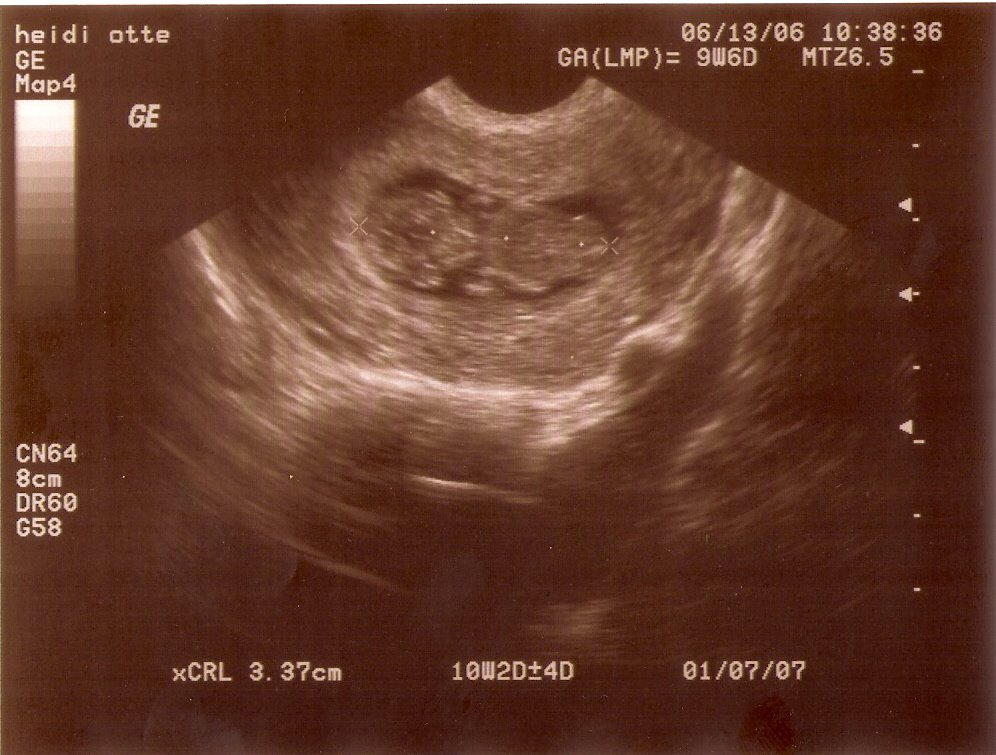
Baby Otte is on the way!


If you hadn't heard the wonderful news, Heidi and I are expecting our first child!!!! Heidi had her first ultrasound yesterday--what an experience! When we saw our baby's heart beating, we both started crying. Unbelievable! This is quite a good shot (I'm told) for 10 weeks. Baby Otte is just chillin' on his or her back, giving us a good view of face, hands, and belly. What a gift!

I desire that our child will someday pray:

For You formed my inward parts;
You wove me in my mother's womb.
I will give thanks to You,
for I am fearfully and wonderfully made;
Wonderful are Your works,
And my soul knows it very well.

Psalm 139:13-14

Friday, May 26, 2006

Finally a place to rest my feet...while I watch TV!

It's taken about two months, but yesterday I put the finishing touches on my coffee table. Ain't she a beauty! Here's some other pics with some exceptional commentary.


Corner view of the coffee table. This is where you could put your feet up if you were sitting on the love seat.


Those black "dots" are called pitch pockets. Don't put your feet on them. They're too pretty.


View from behind our recliner. If you're behind our recliner, you're probably not gonna put your feet up anyway, unless you've got really funny-shaped legs.

Thursday, May 25, 2006

More shocking Da Vinci Code secrets revealed

If you think you uncovered the truth about the Da Vinci Code...you've only scratched the surface. Get the real scoop: Fifteen things you didn't know about The Da Vinci Code.

Tuesday, May 23, 2006

"My ministry is going to the best, most exciting ever!!!"

During seminary, my wise professors warned me about 'honeymoon stage' of ministry and the inevitable moment when all the romanticized expectations would meet reality. To all God-centered seminary professors, pastors and leaders, I say "Thank you for your patience with us 'still green', 'stars-in-the-eyes,' fledgling seminary grads." There's so much talk about re-inventing the church, making it so men don't hate going to church, being postmodern, being emergent...being relevant. May we, the younger generation of leaders, repent of and eschew our generational arrogance, thinking that the previous generation had no clue and we are God's gift to the church. Let us stand on their shoulders, learn from their mistakes, be always reforming, and be convinced of the supremacy and excellency of Jesus.

If your still enjoying the honeymoon, here's some advice...

Real ministry does not take place on a romantic balcony but on a spiritual battlefield.

Thursday, May 18, 2006

The Kingpin Wrecking Crew


Back in the day when I played in band called Leap of Faith, there was another band emerging on the scene, The Kingpin Wrecking Crew. I had a hard enough time learning how play blues on my plastique excuse for a guitar (i.e. Ovation) with my band, but I had no clue what to do the first time I hear The Kingpin Wrecking Crew. They were raw-energy, in-your-face, turn-table-sampling crazy brothers. We were more southern rock and classic blues whereas they were eclectic rock, old-school hip-hop, and funky jazz. Despite the fact that they opened for us at one gig, it's telling that while Leap of Faith is extinct, The Kingpin Wrecking Crew is thriving.

Their newest CD release,"Abolition Strategy", is hogging my mp3 player. I cannot stop listening to it. Check out the lyrics to the opening track "Reel to Real":

Drink up while it's warm. A time comes to plead. And give up a painful surrender indeed. "So sorry," said Elated, "so glad," said Forlorn. "I'm willing," said Regret, "I'm ready," said Not Yet. Changes upon changes stack up; so imperceptible. Its when I realize I'm empty; I'll know whow it feels to be full. Like an enemy soldier, brought trembling before a conquering king to be tried. Only to be embraced, and kissed on the face and given a robe, ring and wine."


The craziness never seems to end. Back in the late 90's I met Doug Elder, the Kingpins lead vocalist/guitarist, at UMF. Fastforward to now, and we go to church together! Crazy huh! So needless to say, I know the man behind the music. There's creativity, honesty, and passion in their music that not only makes CCM music look even silier than it really but also rarely found on the radio dial.

I love how Jesse Jordan captures what Kingpin is about in her review "As The Underground Rises":

Having heard a breathtaking new cut called "Burn The Bridges" from their upcoming release, it is evident that the writing is on the wall. The musical underground is about to represent in a major way. More than just another musical fad to be devoured and regurgitated by the corporate rock machine; KingPin invites us into the very catacombs of the musical underground with them to show us where they live and breathe. Don't be afraid of this subterranean journey, you're with friends and they know the way. All you need to bring is everything you believe, feel, fear, and hope. You might just find your own voice for it all there in the process, after all your guides are music makers and dreamers of dreams.


Give 'em a listen. Let me know what you think.

Link:
The Kingpin Wrecking Crew

Thursday, May 11, 2006

Informational vs Experiential Preaching

The “informational” view of preaching conceives of preaching as changing people’s lives after the sermon. They listen to the sermon, take notes, and then apply the Biblical principles during the week. But this assumes that our main problem is a lack of compliance to Biblical principles, when (as we saw above) all our problems are actually due to a lack of joy and belief in the gospel. Our real problem is that Jesus’ salvation is not as real to our hearts as the significance and security our idols promise us. If that’s our real problem, then the purpose of preaching is to make Christ so real to the heart that in the sermon people have an experience of his grace, and the false saviors that drive us lose their power and grip on us on the spot. That’s the “experiential” view of preaching (Jonathan Edwards.)

~Tim Keller (emphasis added)

Link:
"MINISTRY IN THE NEW GLOBAL CULTURE OF MAJOR CITY-CENTERS"(part 2 of 4)
(The quote is found on page 2 of the article.)

Wednesday, May 03, 2006

McLaren's Open Letter to Songwriters

I came across this article yesterday and found it to be very insightful when it comes to writing lyrics. Brian McLaren is one of the most outspoken leaders today, calling for fresh innovation of telling the “old, old story.” I haven’t read all that he’s written, I don’t agree with all of the little that I have read, but this article deserves our attention. I hope that it challenges you to exult (i.e. “to rejoice greatly over") in the excellencies of God in a way that is fresh and causes the world to take notice of the good news we believe about Jesus the Christ.

Here's a snapshot:
"Let me make this specific: Too many of our lyrics are embarrassingly personalistic, about Jesus and me. Personal intimacy with God is such a wonderful step above a cold, abstract, wooden recitation of dogma. But it isn’t the whole story. In fact—this might shock you—it isn’t, in the emerging new postmodern world, necessarily the main point of the story."


Link: McLaren's Open Letter to Songwriters

Tuesday, May 02, 2006

Engaging the Emerging Church with Hymns

Kevin Twit, of Indelible Grace, recently spoke to SBTS about the modern hymn movement and the ironic way this old music is impacting a new generation. You can listen to his lectures or read through his notes. Either way, you'll better understand why and how modern hymns should and could be used when you gather with other believers.

Here's a few titles of his lectures:

"My Grandmother Saved it, My Mother Threw It Away, and Now I’m Buying It Back: Why We Still Need Hymns in a Postmodern World"

"Exploring the 'Why' behind the Modern Hymn Movement Part 1"

"Exploring the 'Why' behind the Modern Hymn Movement Part 2"

"Engaging the Emerging Church with Hymns"


Link:SBTS Institute for Christian Worship

Got coffee?


If you've got coffee, I've got the table! Almost anyways. My first piece of fine furniture is nearly completed. All the parts are assembled. All that's left is to sand and apply the finish. A friend from WBC who refinishes furniture for a living has offered to teach me how to finish like a pro, so I hope to take him up on the offer this week or next. This table is held together by wood joints and carpenters glue. No screws except for the drawer guides, and that was for future adjustments not strength. It would have been a lot easier not making a drawer but it was so worth the extra effort.

Tuesday, April 25, 2006

For Pastors and "Worship Leaders"

Caedmon's Call once again proves that they've got the glory of God and the good of the church at the core of their music. They are currently offering a free copy of "In the Company of Angels II: the world will sing" to all pastors/"worship leaders". All they ask is that you give a few listens and give them your opinion.

Quite a few of their songs on this second installment of their modern/reworked hymns are great for congregational singing. You'll notice many familiar names in the liner if you're familiar with Indelible Grace or Red Mountain Music.

Here at Windham Baptist Church, we've been singing Indelible Grace's arrangements for almost a year with great acceptance and excitement. They have stoked the fires of faith and awakened a Spirit-ual desire to exult in the excellency and supremacy of God.

What's your church do for music? Only choruses? Hymns? Newly arranged hymns? Specialized services? Have you heard Caedmon's new cd? What do you think?

Link:
In the Company of Angels II

Tuesday, April 18, 2006

Engaging with God: A Review by Ron Man

If you've read anthing I've written, you've no doubt heard me reference David Peterson's book Engaging with God: A Biblical Theology of Worship. Ron Man of Worship Notes recently reviewed this phenomenal work. It's worth your read.

ENGAGING WITH GOD:A BIBLICAL THEOLOGY OF WORSHIPby David Peterson (InterVarsity Press, 2002)
(originally published by Eerdmans, 1992)
InterVarsity Press is to be commended for not allowing this important book to stay out of print. Harold Best, former dean of the Conservatory at Wheaton college, said in the Introduction to his book Unceasing Worship (InterVarsity Press, 2003), “Every thoughtful Christian should read Engaging with God by David Peterson. . . .I cannot begin to say how much Peterson’s work has meant to me. . . . My hope is that I will quietly and humbly walk alongside him, not so much to add to what he has done as perhaps to say the same things another way.” High praise indeed! And if “every thoughtful Christian” should read this book, how much more every pastor and worship leader! David Peterson, formerly of Moore Theological College in Sydney, Australia, is now the Principal of Oak Hill Theological College in London, England. A careful and insightful exegete and theologian, he has provided the most thorough treatment available of the biblical material on worship. As a “biblical theology,” the book takes the approach of examining the subject of worship as it is revealed and practiced
in each successive period of biblical history and each major section of Scripture— hence the Old Testament, the Gospels, the letters of Paul, the epistle to the Hebrews, and Revelation are all dealt with separately,though shown to be complementary and consistent in their development of the theme of worship:
“Throughout the Bible, acceptable worship means approaching or engaging with God on the terms that he proposes and in the manner that he makes possible” (p. 283).

This is not light reading, but well repays careful study and digesting. The author has written this book, in his own words, because “we have enough how-to-do-it books and not enough reflection on worship as a total biblical idea” (p. 21). Amen! Peterson expresses something of the depth and breadth of worship, in its biblical understanding, in the Introduction:

“The theme of worship is far more central and significant in Scripture than many Christians imagine, it is intimately linked with all the major emphases of biblical theology such as creation, sin,covenant, redemption, the people of God and the future hope. Far from being a peripheral subject, it has to do with the fundamental question of how we can be in a right relationship with God and please him in all that we do. One way or another, most of the books from Genesis to Revelation are concerned
with this issue. “Although there is a preoccupation with what may be termed specifically ‘religious’ activities in various Old Testament contexts, ritual provisions are set within the broader framework of teaching about life under the rule of God. In fact, worship theology expresses the dimensions of a life relationship
with the true and living God. This becomes even more obvious when the theme of worship in the New Testament is examined, Contemporary Christians obscure the breadth and depth of the Bible’s teaching on this subject when they persist in using the word ‘worship’ in the usual, limited fashion, applying it mainly to what goes on in Sunday services.” (pp. 17-18)

Engaging with God has been translated into French, Spanish, Russian and Romanian; and additional translations, including Bulgarian, are underway.

Coffee Table


On my day off I have been attempting to build my first piece of furniture: a coffee table. Of all places, I was able to buy solid cherry boards from Mardens (a salvage store) at a third of the price. There's a lot of character to the wood and it will compliment our birch flooring and match our kitchen cabinets. It's been quite the learning process. But my fellow pastor, Mark, has guided me through it and let me use his workshop. I've had to plane the face of the boards and then join/plane the sides so that I could laminate the top. The rails and legs are ready for their final cut. I hope t0 finish it within the next couple of weeks.

Tuesday, April 04, 2006

Covenantal Corporate Worship: Part 8

CONCLUSION
Having investigated why the Christian church gathers for corporate worship, we discovered that engaging with God on the terms that he proposes and the way that he makes possible can only be done within the context of covenant. Even how we gather together for corporate worship greatly impacts our privilege and responsibility to offer acceptable worship in our individual lives throughout the rest of the week. The worship that we offer on Sunday is a continuation of an entire life-orientation of worship that is deeply rooted in God’s redemptive activity that was foreshadowed in the Old Covenant and inaugurated in the New Covenant through our Lord Jesus Christ. May the church continue to offer acceptable worship to God, through Jesus Christ, in the Holy Spirit as we anticipate the consummation of the Kingdom of God.

Monday, March 27, 2006

Covenantal Corporate Worship: Part 7

CIRCUMSTANCES FOR NEW COVENANT WORSHIP

Because of the radical typological fulfillment that occurred in the person and work of Jesus Christ, the corporate worship that was proper in the Old Covenant may actually be improper in the New Covenant. Though animal sacrifice was a required stipulation of the Law, it would be blasphemous to offer an animal sacrifice in view of the atoning efficacy of Christ’s sacrifice on the cross. Likewise, since the local/universal church is the true Temple of God, corporate worship cannot be confined to a geographical location. How then should the New Covenant community of faith deal with the circumstances such as architecture, furniture, and the style of music, in corporate worship? The following are broad principles that consider the global breadth of the church but are specifically applied to the North American church.

Architecture
Given the delocalization corporate worship, where the church worships is not as important as how the church worships. Certainly the corporate worship of a local church is not any more acceptable because they meet in a cathedral rather than in a home, so long as they worship in spirit and in truth (as discussed above). Much thought and care should go into the design and arrangement into the space where corporate worship takes place so that it promotes participation and spiritual formation. What must be guarded against is the notion that where the church gathers is “sacred space.” This is a return to the shadows of Old Covenant worship. How can any physical space be more sacred than where the Holy Spirit dwells—in the believers themselves, corporately and individually? If a congregation decides to meet in or decides to build a “church”, the architectural design should be thought out theologically as well as pragmatically. As a result, those who are gifted artistically have opportunity to exercise their gifts.

Furniture and Art
In the same manner that “sacred space” detracts from the typological fulfillment in both Christ and his people, so our choice of furniture may also. Since the Lord’s Supper depicts the ratification of the New Covenant with all the people of God, then its location and shape should represent this important truth. Priestly vestments and clerical dress potentially obscure the priesthood of all believers. Granted, some sort of distinction between the pastoral staff/church leadership may be necessary, but it must be done so with these theological truths in mind. Even the symbolic value of the Geneva robes ought to be re-evaluated considering the largely forgotten historical context of the preacher as “scholar.” Other traditional furniture such as the pulpit, chairs for the presiding church leaders/elders, and congregational seating are largely matters of preference.

The use of art in the church (buildings) has been hotly contested since the Reformation, leaving many artists disillusioned with some protestant denominations. The Emergent church represents a movement to reclaim the arts, both ancient and contemporary, in worship. Unfortunately, the movement seems to have no organizing, biblical principle to determine the theological appropriateness of their inclusion except the centrality of beauty.[1] During any given gathering, one might be encouraged to venerate icons, light candles, and/or experience a prayer-labyrinth. Therefore, the historical-theological scenarios behind the art and/or artistic practices must be considered when employing them in any church context. Now more than ever, a theology beauty and aesthetics is needed that takes into account the entire drama of redemptive history, the controversies of church history, and the needs of the local congregation

Music
As mentioned in the introduction, our church-culture’s obsession with music reveals a widespread ignorance of the function of corporate worship in relation to God’s total plan and purpose for his people. Just as an overemphasis on the Word or the Table can detract from the continuity of the other parts of the service, so the current attitude of “music equals worship” actually detracts from the potential spiritual formation and edification that should take place when the church is gathered. The debate between “traditional” vs. “contemporary” is misguided and has resulted in sinful divisions, the tyranny of personal preference, and individualism. It is normally assumed that since the New Testament speaks so little about the style of corporate worship music that there is unlimited freedom. Nevertheless, whether a church chooses to adapt mainly a classical-traditional, contemporary, or blended style, the lyrics and accompaniment should serve the overall flow of the four-fold service and encourage participation. A wisely arranged blend of “old and new” music is perhaps the best decision since it keeps an eye on the past and a pulse on the present workings of the Holy Spirit. In addition, when special music and choirs are utilized, the appearance and attitude of performance should be guarded against. This also applies to all musicians. Finally, the congregation is the chief instrument of praise. Indeed, as we offer our tribute to our Redeemer King in the form of unified, vocal praise, we depict on earth the ultimate heavenly gathering when all the covenant people of God and the hosts of angels will confess:

"Salvation belongs to our God who sits on the throne, and to the Lamb! Amen! Blessing and glory and wisdom and thanksgiving and honor and power and might be to our God forever and ever! Amen."
~Revelation 7:10, 12~

FOOTNOTES
[1] See especially Dan Kimball, Emerging Worship: Creating Worship Gatherings for New Generations (Grand Rapids: Zondervan, 2004).

Tuesday, March 21, 2006

Covenantal Corporate Worship: Part 6

PASTORAL CONSIDERATIONS FOR CORPORATE WORSHIP

Having answered the question “Why does the Christian Church gather for corporate worship?” we now turn to the question “How should the Christian Church gather for corporate worship?”

AN ORDER OF SERVICE FOR THE NEW COVENANT COMMUNITY

Because there is no clearly defined order of service set forth in the New Testament, we must investigate the earliest patterns of Christian worship. However, for an order of service to be biblical, it must have more than historicity in its favor; it must reflect, in substance and in form, God’s total plan and purpose for his people. Therefore, it must be covenantal. The early church reflected its Christologically-covenantal origin through a twofold focus: the ministry of the Word and the Table. In his First Apology (ca. 155 A.D.), Justin Martyr reflected this liturgy in his comments about early Christian worship:

On the day which is called Sunday, all who live in the cities or in the countryside gather together in one place. And the memoirs of the apostles or the writings of the prophets are read as long as there is time. Then, when the reader has finished, the president, in a discourse, admonishes and invites the people to practice these examples of virtue. Then we all stand up together and offer prayers. And, as we mentioned before, when we have finished the prayer, bread is presented, and wine with water; the president likewise offers up prayers and thanksgivings according to his ability, and the people assent by saying, Amen. The elements which have which have been “eucharistized” are distributed and received by each one; and they are sent to the absent by the deacons.” [1]

Over the course of time, two other formal sections were developed and added, thus making a four-fold order of corporate worship: 1. The Acts of Entrance/Gathering, 2. The Service of the Word, 3. The Service of the Table, and 4. The Acts of Dismissal. [2] The tendency throughout the wide span of church history has been to emphasize either the Word or the Table more than the other. For example, whereas the medieval church placed a high priority on the Eucharist, the Reformation church placed a greater emphasis on the preaching of the Word. No less a quagmire is the current state of corporate worship in evangelicalism, which has no consistently discernible liturgy[3] and seems to have invented a new sacrament in its overemphasis on music! The varying emphases of the different traditions suggest, whether intentionally or unintentionally, that certain aspects of the corporate worship service are more important than the others. A return to a biblical, covenantal epistemology will aid in correcting both the past and present excesses and neglect brought on by human tradition, political compromise, biblical ignorance, over-reactionary measures, and individualistic experientialism. By following the simplistic movement of the four-fold pattern, Christian corporate worship best demonstrates its place in redemptive history and faithfulness to stipulations and character of the New Covenant. Precisely because a covenant is made up of equally important elements (historical prologue, stipulations, etc.), so the four-fold pattern emphasizes how the entire corporate gathering is a covenantal act of worship. Richard C. Leonard summarizes it well:

Historic Christian liturgy moves through a sequence of entrance, service of the Word, service of the Lord's Table, and dismissal. This pattern certainly reflects the general outline of Biblical covenant structure. The entrance serves as the prologue, a joyful celebration of the Lord's dominion and his acts of salvation. The service of the Word brings forth the Scriptures as the stipulations or charter defining the relationship between the great King and his servants. The service of the Lord's Table is an act of covenant affirmation, the worshipers' pledge of loyalty in the intimacy of communion and mutual participation. The dismissal is a time of benediction or blessing pronounced upon the faithful, those who keep covenant with Christ the King. [4]

The benefits of such a liturgy become obvious when seen in light of its consistency with the covenantal structure of biblical revelation and its denominational and cultural transferability. To better explicate how this order of service might function within a North American context, we will consider the different elements that may be applied in each movement. Appendix 1 “Order of Service Sample and Rationale” has been attached as an example of the following principles applied within the context of an entire corporate worship service.

The Acts of Entrance
Every church has its own liturgy, whether the denomination belongs to a liturgical [5] tradition (Roman Catholic, Anglican) or whether it belongs to the Free Church movement (Baptist, Charismatic). Therefore, how a congregation begins their service reveals many of their presuppositions for gathering. If the beginning elements of the service are mere formalities for the “important stuff” (i.e. the preaching or the Lord’s Supper), then this reveals a missed opportunity for proper worship. Some elements that may be incorporated in the Acts of Entrance include the call to worship, an opening hymn, the invocation, prayer to and/or acknowledgement of God, confession of sin, and words of encouragement. However, the declaration and realization that the community of faith has gathered out of obedience to their Redeemer-King is the most vital aspect that must be communicated and experienced. Thus, God Himself is the one who actually issues the “call to worship.” The songs chosen ought to recount God’s mighty acts of salvation and his covenant character, while the prayer of adoration and time of confession/encouragement remind the people of God that their engagement with a holy God is only made possible by the forgiveness they have received by faith in Jesus’ death and resurrection. The constant flow of the service then becomes “revelation of/from/about God” and the “response from/by the people of God.”

The Service of the Word
The Service of the Word involves hearing the stipulations of the New Covenant read and taught. One of the benefits of using a lectionary is the large quantity of organized Scripture readings throughout the course of the year. However, the lectionary can be confining and or become a “required” element of corporate worship when it is actually only a form. On the other hand, many evangelical churches have little Scripture read (or taught!) in the average service. Therefore, the intention of the lectionary ought to be carried through by a prayerfully constructed reading of the Scriptures that complements the preaching of the Word. Many denominations include the brief response after the Scripture Reading: “This is the Word of God”—leader; followed by “Thanks be to God”—the congregation. Any songs chosen during the service of the Word ought to convey the congregation’s response to hearing the revelation of God’s Word, emulates Israel’s response to their hearing God’s Law being read at Sinai or at the Tabernacle or Temple.

The Service of the Table
As noted above, the Lord’s Supper most explicitly symbolizes the ratification of the New Covenant. Originally, the celebration of the Table involved a community meal (Acts 2:42, 46; 1 Cor 10:26; 11:21ff.) traditionally known as the “agape feast.” This is significant considering the institution of both the Sinaitic Covenant and the New Covenant involved and/or were followed by a covenant meal. As the church became more established and the celebration became more formal and elaborate, the meal was abandoned. Furthermore, many restrictions were placed on the catechumenate that made the Lord’s Supper the privilege of the “sanctified” few rather than the means of grace for the entire community.

Most non-liturgical churches celebrate the Lord’s Supper monthly. Supposedly, if the Table is celebrated too often (weekly), familiarity and a lack of significance may result. This is completely unfounded since the New Testament and early church both portray at least a weekly observance of this ordinance. Thus in order to remind the congregation of their covenantal relationship with God and each other, a weekly or bi-weekly inclusion of the service of the Table may be the best option. The distribution and reception of the elements ought to convey a mixture of somber reflection and joyous celebration, remembering both the first and second Comings of Jesus Christ. Passing the bread and the wine throughout the seated congregation appropriately communicates the priesthood of believers. The vessels and furniture need not be overly ornate, reflecting the simple beginnings of the apostolic church and avoiding the over-complication, sometimes associated with the Catholic Mass.

For the alternative week, a similar time of recounting God’s acting on behalf of his people may include opportunity for corporate thanksgiving and testimony. A time for extemporaneous prayer for and by the congregation would be most fitting. The recitation of a creed, ancient or modern, would be appropriate for both the Service of the Table or the Service of Thanksgiving and Testimony. It communicates the catholicity of the church and the communion of saints, further emphasizing the salvation of the entire community and guarding against the individualization so common in our culture today.

The Acts of Dismissal
The Acts of Dismissal remind the congregation that their corporate worship flows in and out of their life of worship and that they carry out their mission to the world as the covenant community of God. A song of commission, rather than praise or prayer, may best enforce the urgency of the movement from the “church gathered” to the “church scattered.” Lastly, when the benediction is pronounced, the congregation is comforted by God’s abiding and empowering presence as they are commissioned to extend the boundaries of the Kingdom of God in their homes, their schools, their workplaces, their local communities, or the ends of the earth.

FOOTNOTES
[1] Bard Thompson, Liturgies of the Western Church (Philadelphia: Fortress, 1961), 9.
[2] The four-fold order of service is detailed in Robert Webber, Worship is a Verb (Peabody: Hendriksen, 1992), 45-54. Also helpful is Michael Horton’s chapter “What should Our Service Look Like?” in A Better Way: Rediscovering the Drama of God-Centered Worship (Grand Rapids: Zondervan, 2002), 141-162. There, Horton plainly lays out the covenantal structure that is common throughout many Reformed churches and discusses the elements and circumstances (under the convictions of the Regulative Principle). Both Webber and Horton define the essential elements of corporate worship on the basis of the covenantal nature of New Testament worship.
[3] By “liturgy,” I simply mean an order of service that is biblically intentional and historically sensitive. Even though there is no explicit mandate in the New Testament for a particular order of service, or liturgy, there are certainly better and worse arrangements. Unless a congregation meets without any pre-planned order, that congregation has created an order of service, a liturgy that they have deemed to be the most appropriate for their congregation at a particular time. In this way, every church (and really denomination) has it’s own liturgy, except possibly the Quakers.
[4] Leonard, “The Biblical Covenant and Christian Worship.”
[5] By “liturgical,” I mean an order of service that is highly detailed in its pre-planning. Churches that are “liturgical” usually utilize an order of service that contains specific readings for both the leader of the service and the congregation. This originally was to promote the congregation’s participation in the service rather than spectatorship. In fact, “liturgy” comes from the Greek, leitourgi,a, which simply means “public service, the activities of Christian service” or put another way, “the work of the people.” Unfortunately, the liturgy of (some) liturgical churches has become entrenched and unchangeable. However, even though non-liturgical churches are less formal, their lack of a detailed, pre-planned service often results in members becoming an audience rather than participants. Because both traditions end up with some sort of order of service, both run the risk of leaders and members equating their way of “doing corporate worship” as the right way. Both traditions need leaders who understand and can explain why we do what we do in corporate worship in light of God’s total plan and purpose for his people.

Friday, March 17, 2006

St. Patrick's Day Dinner...Postponed

Almost exactly a year ago, Pope John Paul II and I had the stomach flu together (or at least at the same time). Well would you know it, it happened again! Needless to say, it not only wreaked havoc into my life all of Wednesday and into Thursday, it has caused us to postpone our St. Patrick's Day Dinner. I know, I know...the typical New England boiled dinner is not authentic Irish cuisine and practically no one in Ireland will be feasting on it today. But for us American-Irish, it's part and parcel. So instead, Heidi and I will be welcoming some of our friends over Sunday evening to partake in a belated St. Patrick's Day Dinner.

Last January while I was at the Mall of America I finally found my family crest and coat of arms. Give it up for O'Leary! Like I always say, "If your're lucky enough to be Irish, then you're lucky enough!" Erin Go Bragh!

Tuesday, March 14, 2006

Covenantal Corporate Worship: Part 5

NEW TESTAMENT WORSHIP (cont.)

How then did the New Covenant community worship? To begin with, the majority of all cultic language describes worship as an entire life-orientation, rather than the activities of corporate worship. Christians are exhorted to “present your bodies a living and holy sacrifice, acceptable to God, which is your spiritual service of worship” (Rom 12:1). Thankful lips are considered “a sacrifice of praise to God” that is to be offered like incense (Heb 13:14), and good works are “sacrifices [with which] God is pleased” (Heb 13:15). The church is the “Israel of God” (Gal 6:16)—the Mount Zion that stands in contrast to Mount Sinai of the Old Covenant (Heb 12:22), a “a chosen race, a royal priesthood, a holy nation” (1 Pet 2:9), and the “New Temple” (Eph 2:19-22; 1 Pet 2:4-5). D. A. Carson notes wisely, “This transformation of language is inescapable and is tied to the shift from type to antitype, from promise to reality, from shadow, to substance.” [1]

However, this radical language-shift does not nullify the need to meet together, but in fact it necessitates it because of our covenant stipulations to our Redeemer King and our fellow citizens of the Kingdom of God. As Peterson avers, “It may be best to speak of congregational worship as a particular expression of the total life-response that is the worship of the New Covenant.” [2] Indeed, 1 Cor 14 speaks the most specifically concerning the corporate worship and even lists many of the elements common to their meetings: singing of hymns, teaching, proclaiming a revelation, speaking in tongues, or giving interpretation. In addition to this, we must also include celebration of the Lord’s Supper (1 Cor 11:20-34), the prayers of and for the people, the public reading and preaching of the Scriptures, and tithes and offerings (1 Cor 16:1-4). [3] What is peculiar about the early Christian gatherings, however, is the central importance of edification over and against religious activity itself. The apostle Paul concludes that in the midst of doing all of these things, “Let all things be done for edification” (1 Cor 14:26). Likewise, the Christians were not to neglect meeting together for the express purpose of encouraging one another (Heb 10:25). There need not be a divorce between worship and edification; rather, edification is one of the chief ways the church gathered can glorify God. Moreover, the gathered assembly is ultimately eschatological, pointing to that triumphant gathering before the throne of God in the new heavens and new earth: “Let us not give up meeting together, as some are in the habit of doing, but let us encourage one another-- and all the more as you see the Day approaching” (Heb 10:25). Because the Kingdom of God has only been inaugurated, the church must encourage one another to remain faithful to God in the midst of conflicting loyalties until the day of consummation at the return of Christ. Until then, our corporate worship ought to reflect the same reverence and confidence displayed by the heavenly assembly throughout the throne-room worship scenes in Revelation and so fuel our passion to live lives of faithful witness. In the first Exodus, the Israelites were delivered from the tyranny of Pharaoh by the servant of God, Moses, and eventually entered the Promised Land; in the Second Exodus, the end times’ people of God are delivered from the tyranny of the beast, and ultimately Satan, by the Servant of God, the Lamb and will stand before the very throne of God, to inherit the New Heavens and New Earth—the fulfillment of which the Promised Land was but a shadow. On that day we shall all sing the song of Moses and the song of the Lamb:

And they sing the song of Moses, the servant of God, and the song of the Lamb, saying,

"Great and amazing are your deeds, O Lord God the Almighty!
Just and true are your ways, O King of the nations!
Who will not fear, O Lord, and glorify your name?
For you alone are holy. All nations will come and worship you,
for your righteous acts have been revealed."

~Rev 15:3-4~

ORGANIZING PRINCIPLE OF BIBLICAL, CORPORATE WORSHIP

Given the covenantal structure implicit and explicit in all of Scripture, the following “organizing principle” is suggested: Our individual and corporate worship is our tribute to God because the substitutionary, atoning death of Jesus Christ inaugurated the New Covenant of which we are made members by the grace of God. More specifically, during the communal act of engaging with God, we come together to meet with our Lord who has redeemed us, called us into covenant with himself, and commissions us to be his servant-witnesses. In doing so, we celebrate and renew our covenant obligations, reminding and exhorting one another that we are a called-out community with responsibilities to God and each other and a mission to the world.

FOOTNOTES:
[1] Carson, 39.
[2] Peterson, 220.
[3] Edmund Clowney, “Presbyterian Worship,” Worship: Adoration and Action, ed. D.A. Carson (Grand Rapids: Baker Academic, 1993), 117, provides the most succinct summary of what took place when the church was gathered: “As in the synagogue, corporate prayer is offered (Acts 2:42; 1 Tim 2:1; 1 Cor 14:16); Scripture is read (1 Tim 4:13; 1 The 5:27; 2 The 3:14; Col 4:15, 16; 2 Pet 3:15, 16) and expounded in preaching (1 Tim 4:13; cf. Luke 4:20; 2 Tim. 3:15-17; 4:2. There is a direct shift from the synagogue to the gathering of the church (Acts 18:7, 11; cf. 19:8-10). The teaching of the word is also linked with table fellowship (Acts 2:42; 20:7; cf. vv. 20, 25, 28). The songs of the new covenant people both praise God and encourage one another (Eph 5:19; Col 3:15; 1 Cor 14:15, 26; cf. 1 Tim 3:16; Rev 5:9-13; 11:17f; 15:3-4). Giving to the poor is recognized as a spiritual service to God and a Christian form of “sacrifice” (2 Cor 9:11-15; Phil 4:18; Heb 13:16). The reception and distribution of gifts is related to the office of the deacon (Acts 6:1-6; Rom 12:8, 13; cf. Rom 16:1, 2; 2 Cor 8:19-21; Acts 20:4; 1 Cor 16:1-4) and to the gathering of believers (Acts 2:42; 5:2; 1 Cor 16:2). The faith is also publicly confessed (1 Tim 6:12; 1 Pet 3:21; Heb 13:15; cf. 1 Cor 15:1-3). The people receive God’s blessing (2 Cor 13:14; Luke 24:50; cf. Num 6:22-27). The holy kiss of salutation is also commanded (Rom 16:16; 1 Cor 16:20; 2 Cor 13:12; 1 Thes 5:26; 1 Pet 5:14). The people respond to praise and prayer with the saying of “Amen” (1 Cor 14:16; Rev 5:14; cf. Rom 1:25; 9:5; Eph 3:21 etc). The sacraments of baptism and the Lord’s Supper are explicitly provided for. (1 Cor 11:23-27; Mat 28:19-21). Confession is linked with baptism (1 Pet 3:21); and a prayer of thanksgiving with the breaking of the bread (1 Cor 11:24).”

Wednesday, March 08, 2006

Tyrannical Sentamentalism

Sentimentality is subtle. C.S. Lewis once told a young writer: “Instead of telling us a thing is ‘terrible,’ describe it so that we’ll be terrified. Don’t say it was a ‘delight,’ make us say ‘delightful’ when we’ve read the description. You see, all those words (‘horrifying,’ ‘wonderful,’ ‘hideous,’ ‘exquisite’) are only saying to your readers, ‘Please will you do my job for me.’” Lewis complains that authors of gushy and sentimental words are tyrannical because they tell the readers they must feel rather than letting the subject work on them in the same way it did the author. Sentimental worship leading works in exactly the same way that Lewis describes. With typical comments—“Isn’t he just wonderful?” “Isn’t it such a blessing?”—the leader tells people how they ought to feel about God instead of telling them about God.[1]


[1] Timothy J. Keller, “Reformed Worship in the Global City” in D.A., Carson, ed., Worship By the Book (Grand Rapids: Zondervan, 2000), 211 quoting W.H. Lewis ed., Letters of C.S. Lewis (New York: Harcourt, Brace, and World, 1966), 271.

Tuesday, March 07, 2006

We're Moved In!

Our house is finally finished! We've signed our 30 year mortgage!! We're moved in (mostly)!!! We're loving it!!!! The house is far greater than we had hoped. Overwhelmed, we are by God's lavish provision. Enjoy the tour....


Covenantal Corporate Worship: Part 4

New Testament Worship

Since covenant was such an integral component to God’s redemptive activity in the Old Testament, it is no surprise that it continues to be central to his plans and purposes in the New Testament. Just as the Exodus from Egypt established the Old Covenant with the nation of Israel, the Second Exodus of Christ’s death and resurrection established the New Covenant with the new Israel.

The covenant theme is embedded in Jesus’ central message of the Kingdom of God. In fact, the gospel is essentially the “good news” that God, the great King, re-established his royal, holy presence and rule in a new and unparalleled way through the ministry and person of Jesus Christ. This was accomplished through the atoning, substitutionary death of Jesus Christ. The redemptive significance of Jesus’ death is powerfully demonstrated in the celebration of the Lord’s Supper by the New Covenant community. Richard C. Leonard summarizes it well:

With respect to Christian worship, the most obvious reference to covenant in the New Testament is Jesus' institution of the Lord's Supper, when he declares, "This is my blood of the covenant, which is poured out for many" (Mark 14:24). The death of Christ is the sacrifice that enacts the new covenant, which now embraces not only the faithful Jew but the believing Gentile also — as, indeed, the covenant with Israel originally included any worshiper of Yahweh, regardless of ethnicity. The continued observance of the Lord's Supper is a re-presentation of the death of Christ (1 Cor. 11:26) which has created the people of the new covenant.[1]

The blood Moses sprinkled on the Israelites at the foot of Sinai to ratify the Old Covenant prefigured Jesus’ death whereby his blood on the cross secured forgiveness for his chosen people, thus ratifying the New Covenant. More than that, Jesus’ sacrificial death did what the entire sacrificial system was incapable of accomplishing and only pointed to (Heb 10:4ff)—taking away the sins of the world. Through the person and ministry of Jesus, redemptive history crescendoed as God once again personally dwelt in the midst of his people. The veil that separated God and humanity, to preserve his holiness, was torn apart (Mar 15:58; Heb 10:20) and the Temple thus became obsolete through the atoning death and life-giving resurrection of Jesus, who being God-with us, is in fact with us until the consummation of the age (Mat 28:20; cf. 1:23)! What Old Testament worship typologically prefigured in the shadows of ritual (Heb 8:5) Jesus Christ fulfilled; he replaces all of Israel’s provisions for engaging with God: He is the Passover Lamb (1 Cor 5:7); the Great High Priest who offered the final sacrifice for sins (Heb 10:12); the Prophet like Moses (John 4:24); the Mediator between God and humanity (1 Tim 2:5); and even the true “Temple” (Mat 12:12).

Because there is a heightened emphasis on worship-as-a-life-orientation in the NT, Jesus' words to the Samaritan woman—“An hour is coming, and now is, when the true worshipers will worship the Father in spirit and truth” (John 4:23)—are often interpreted as meaning internal/“spirit” and cerebral/“truth.” However, this is to miss the most important development that accounts for the continuities, as well as the discontinuities, between Old and New Covenant worship. As David Peterson puts it, “New-covenant worship is essentially the engagement with God that he has made possible through the revelation of himself in Jesus Christ and the life he has made available through the Holy Spirit.”[2] Therefore, worship “in spirit and truth” must be God-centered, made possible by the gift of the Holy Spirit, grounded in the knowledge of and conformity to God’s Word made flesh, Jesus Christ who is the Way, the Truth and the Life. For this reason, Jesus proclaimed that the geographical location of worship was a no longer a requirement of true, acceptable worship.


[1] Leonard, “The Biblical Covenant and Christian Worship.”

[2] Peterson, 100. D.A., Carson, ed., Worship by the Book (Grand Rapids: Zondervan, 2000), 37, adds, “Moreover, in [the gospel of John]—in which Jesus appears as the true vine, the true manna, the true Shepherd, the true temple, the true Son—to worship God “in spirit and in truth” is first and foremost a way of saying that we must worship God by means of Christ.”